Blog 1 — Signs of Hidden Water Damage
8 Signs You Have Hidden Water Damage in Your Cleveland Home
Quick Answer
The most reliable signs of hidden water damage include musty odors in rooms with no visible wetness, soft or discolored spots on drywall and ceilings, warped flooring or bubbling paint, higher water bills without an obvious cause, visible mold growth near baseboards or in corners, staining on interior walls, efflorescence on basement concrete, and rust on metal fixtures inside walls or around plumbing penetrations.
Cleveland homes are built to last, but they have a vulnerability that newer construction does not: age. The vast majority of single-family homes in C-Town were built before 1980. Many date to the early 1900s. Aging plumbing, original window glazing, century-old foundations, and decades of Cleveland winters mean that hidden water intrusion is not rare here — it is common. By the time most homeowners see visible damage, moisture has already been present long enough to compromise structural materials or start mold growth.
These are the eight signs we most commonly find when we inspect homes in Cleveland and Northeast Ohio. If you recognize more than one, call us at (216) 803-6030 for a moisture inspection.
1. A Musty Odor That Does Not Go Away
Musty smells are the most consistent early indicator of hidden water damage. The odor comes from microbial volatile organic compounds produced by mold and mildew growing in wet organic material. If you notice it in a specific room — especially a basement, bathroom, laundry area, or a first-floor room adjacent to an exterior wall — take it seriously. In Cleveland, this odor is common in older homes where basement walls have developed hairline cracks that let in groundwater seasonally. A dehumidifier that masks the smell is not a solution — the source needs to be found and addressed.
2. Soft, Stained, or Bubbling Drywall
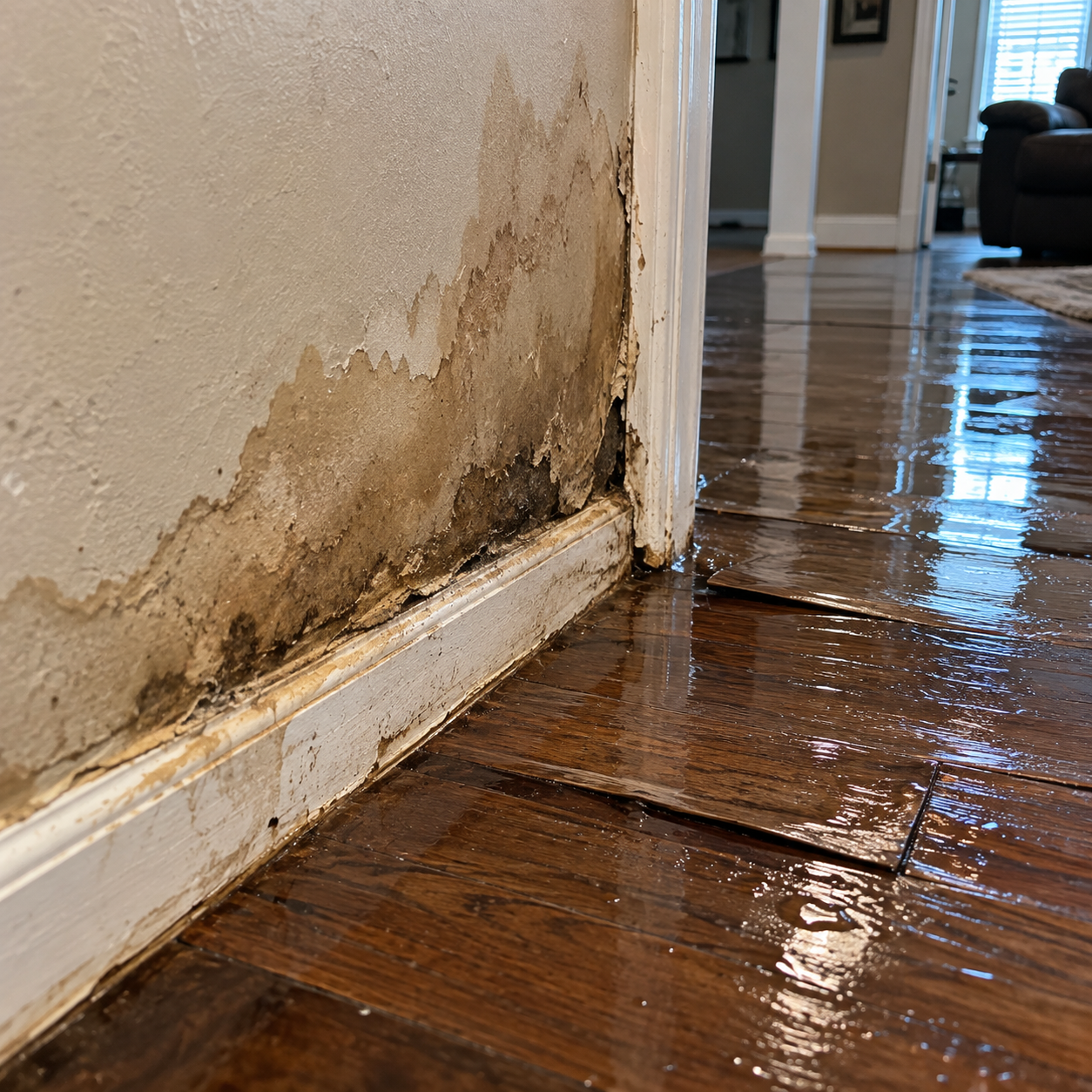
Drywall absorbs moisture readily and fails fast. When water gets behind drywall — from a leaky pipe, a roof intrusion, or a window seal failure — the paper facing discolors to yellow or brown, the surface softens, and eventually it bubbles or crumbles when pressed. In Cleveland homes built before 1950, some interior walls are plaster over wood lath. The failure pattern is similar: discoloration, soft spots, and eventually cracking or buckling. Soft wall material is a clear signal that moisture is or has been present in the wall cavity.
3. Ceiling Stains or Sagging
Brown or yellow ring-shaped stains on ceilings are a recognizable sign of water intrusion from above. The stain forms when water wicks through the ceiling material, deposits minerals as it evaporates, and leaves a residue behind. A single stain does not mean the problem is over — it means water reached that point at some time. In Cleveland, ceiling stains on upper floors are frequently caused by ice dam damage. Lake-effect snow builds up on roofs, melts near the attic, refreezes at the cold eaves, and backs water up under the shingles. These leaks are intermittent and can produce staining without any obvious active drip.
4. Warped, Buckled, or Soft Flooring
Hardwood floors absorb moisture from below when subfloor materials get wet. The wood expands and planks cup, crown, or buckle. Laminate flooring swells at the seams. Vinyl flooring develops bubbles. Tile cracks at the grout lines as the substrate shifts. Soft spots in hardwood or subfloor material — areas that flex underfoot — usually indicate the subfloor has been wet long enough to begin delaminating or rotting. In Cleveland homes with wood subfloor over a crawl space, this can happen from below without any visible water ever reaching the finished floor surface.
5. Paint That Is Bubbling, Peeling, or Flaking
Paint on interior walls or ceilings bubbles and peels when moisture trapped behind or in the wall material converts to vapor and pushes against the paint film. On exterior walls, peeling interior paint often signals that the wall assembly has a bulk water intrusion problem — water getting through siding, windows, or flashings and wicking into the wall cavity. In Cleveland’s historic neighborhoods — Ohio City, Collinwood, Glenville — original wood siding, aging window glazing, and deteriorated flashing details are common failure points. Bubbling paint on a wall that has no plumbing behind it is almost always a building envelope problem.
6. Efflorescence on Basement Walls or Concrete
Efflorescence is the white, chalky, crystalline deposit that appears on concrete, brick, or block walls when water moves through the masonry and carries dissolved salts to the surface. This sign is specific to Cleveland homeowners with block or poured concrete basements — which is most of us. Efflorescence does not mean your basement is flooding — it means water is moving through the wall. Over time, the same water movement that produces efflorescence also causes spalling, mortar joint erosion, and eventually cracks that let in bulk water. Catching it at the efflorescence stage is the right time to address drainage and foundation sealing.
7. Unexplained Increase in Your Water Bill
If your water usage has increased without any obvious reason, a hidden pipe leak is one of the most likely causes. A slow leak from a supply line, toilet flapper, or faucet stem can waste hundreds of gallons a month without producing any visible water at the surface. The practical test: turn off everything in the house that uses water and look at your water meter. If the dial is still moving, water is leaving your system somewhere. These leaks are consistently damaging because they are slow enough to avoid obvious flooding but continuous enough to keep materials wet and support mold growth over months or years.
8. Rust Stains Around Pipe Penetrations or on Metal Fixtures
Rust at the base of supply line connections under sinks, around the flange where a toilet meets the floor, or on the fasteners around a water heater often signals a slow, ongoing leak. In Cleveland’s older housing stock, galvanized steel and cast iron pipe connections are common in homes built before the 1960s. These materials corrode from the inside out and can produce pinhole leaks inside wall cavities long before they fail completely. Rust staining on drywall, framing, or finished surfaces near any plumbing penetration is worth investigating. For a professional assessment, reach out to our water damage restoration team in Cleveland.
Common Questions About Hidden Water Damage
Water damage can go undetected inside a wall for weeks, months, or even years if the source is a slow drip. Slow leaks from supply line fittings, toilet fill valves, or failed caulking around tubs and showers can keep drywall and framing continuously damp without producing obvious surface signs. Mold can establish and spread inside a wall cavity for months before it breaks through or produces a detectable odor. Thermal imaging and penetrating moisture meters are the only reliable way to find slow leaks inside wall assemblies.
Yes. A small ceiling stain means water reached that point at some time. Monitor it over several weeks and see if it grows, especially after heavy rain or during winter. If it grows, the source is still active. Any stain associated with ice dam patterns — appearing below the roof line on upper floors — should be inspected during late fall or early winter when ice dam formation is likely.
If you have an active leak from a pipe, call a plumber first to stop the source. Then call a water damage restoration company to assess what has been affected and begin drying. A plumber repairs the source; a restoration company addresses the structural materials and moisture the leak left behind. We can coordinate with your plumber and work alongside them, and we bill your insurance carrier directly for the restoration scope.
Not always, but often. If water damage has been present for more than 24 to 48 hours and affected porous materials like drywall, insulation, or wood framing, mold is likely even if not yet visible. For confirmed mold presence, see our mold remediation services page for how the removal and verification process works.
Charles Wilson — Owner, Cleveland OH Water Damage
Charles Wilson has spent years working in property damage restoration across Northeast Ohio, managing water damage, mold remediation, and structural drying projects in Cleveland and surrounding communities. Reach Charles at (216) 803-6030 or [email protected].
Think You Have Hidden Water Damage?
Call (216) 803-6030 for a moisture inspection or fill out the form.
Request an Inspection
Fill out the form and we will call you back within 15 minutes.