Emergency Water Damage Cleveland, Ohio | We Answer Every Call
When water is actively entering or has just flooded your property, every minute of delay increases total damage. We pick up the phone 24 hours a day, 7 days a week, and we are on site within 60 minutes.
(216) 803-6030 — Call Right NowQuick Answer
After water damage in Cleveland, immediately shut off the water source if it is a burst pipe or appliance failure, turn off electricity to affected areas at the breaker panel, remove people and pets from standing water areas, and call a restoration company. Do not run fans or HVAC — this spreads contamination. Call (216) 803-6030 now; we arrive within 60 minutes.
What Counts as an Emergency Water Damage Situation
Not every water damage situation is an emergency in the same way — but many are. If water is currently entering your property, has just stopped, or has been standing for less than 24 hours, you are in an emergency window. Acting fast in this window is the single most important factor in limiting total damage and keeping restoration costs manageable.
These situations are always emergency calls:
- Active burst or leaking pipe with water flowing into the structure
- Basement flooding from any source
- Appliance failure — water heater, washing machine, dishwasher — with water spreading across a floor
- Roof failure during or after a storm with active interior dripping
- Sewage backup through floor drains or toilets
- Water discovered in walls or ceilings with unknown source
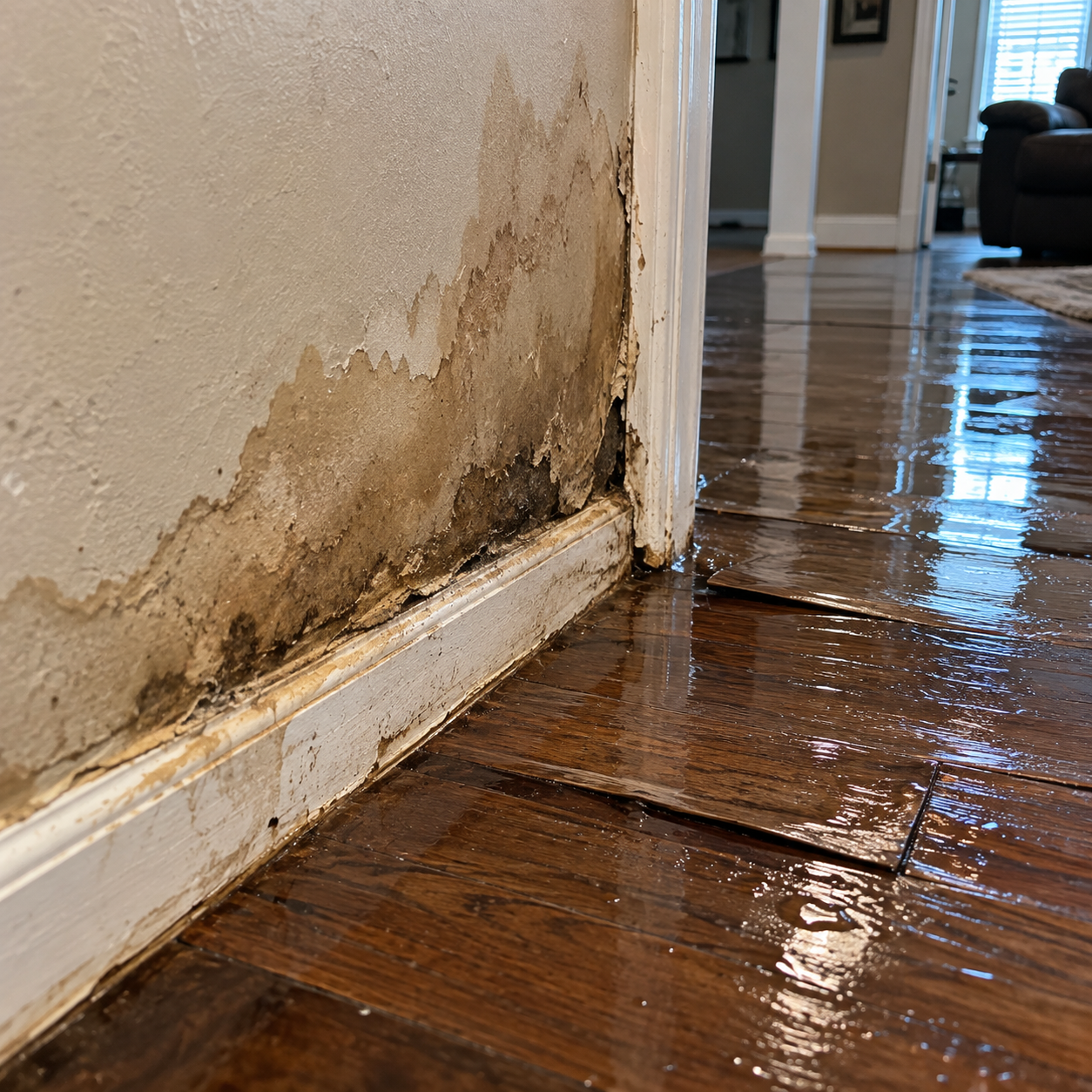
Even if the water has stopped and the visible puddles are gone, call us. Water wicks laterally and vertically through building materials faster than it appears on surfaces. What looks dry on the surface is often saturated beneath.
See also: Water Damage Restoration Cleveland | Mold Remediation Cleveland
Emergency? Call First.
For active water events, call (216) 803-6030 immediately. Fill out the form for non-active situations.
What to Do While Waiting for Us to Arrive
These steps can reduce total damage while you wait for our crew.
Shut Off the Water Source
If the water is from a burst pipe or appliance, find the main water shutoff and turn it off. For a specific appliance, use its individual shutoff valve first. Every minute the source keeps flowing adds more water and more damage.
Turn Off Electricity to Affected Areas
Go to your breaker panel and turn off circuits serving the flooded areas. Do not step in standing water if there is any possibility of live electrical contact. Water and electricity are a fatal combination. When in doubt, stay out and wait for us.
Move Valuables to Dry Areas
If it is safe to do so, move important documents, electronics, and personal items to elevated, dry areas. Place aluminum foil or wood blocks under furniture legs in wet areas to prevent staining and wicking. Do not carry items through contaminated water.
Do Not Run Your HVAC or Fans
Running your HVAC system or fans circulates air that carries mold spores and, in sewage backup situations, aerosolizes pathogens through your duct system. Leave the HVAC off and resist the urge to use box fans. Our professional equipment will dry your home correctly without spreading contamination.
Document the Damage
Take photos and video of visible damage from safe positions before anything is moved or cleaned up. This documentation supports your insurance claim. Capture the source, the extent of water spread, and any contents that have been affected.
The Hourly Damage Timeline: Why 60 Minutes Matters
Water damage is not a static situation. It is an accelerating one. Here is what happens to your home in the hours after a water event, and why our 60-minute response window is not arbitrary.
Within minutes: Water spreads to dry areas. Drywall paper absorbs moisture on contact. Wood flooring begins swelling at the seams.
1 to 2 hours: Furniture begins staining carpet. Drywall softens and begins losing structural integrity. Books and documents absorb water and warp irreversibly.
2 to 6 hours: Paint blisters and peels. Metal surfaces begin oxidizing. Dyes bleed from furniture and textiles into flooring.
6 to 24 hours: Structural wood begins swelling and warping. Laminate flooring delaminates. Mold spore germination begins on wet surfaces.
24 to 48 hours: Visible mold growth begins. Structural materials deteriorate significantly. Costs for restoration increase substantially for each additional day of delay.
Beyond 48 hours: Structural damage may become extensive. Black mold colonies establish and spread. Insurance documentation becomes harder to establish cleanly.
The bottom line: A burst pipe addressed within one hour typically costs 30 to 50 percent less to restore than the same event discovered 24 hours later. Call (216) 803-6030 the moment you discover water damage.
Emergency Water Damage Service Area — Cleveland and 50 Miles
We respond to emergency water damage calls 24 hours a day, 7 days a week, anywhere within 50 miles of Cleveland.
Frequently Asked Questions
Shut off the water source, turn off electricity to flooded areas at the breaker, move to safety, document the damage with photos, and call (216) 803-6030. Do not run fans or HVAC. Do not enter sewage-contaminated areas. We will walk you through next steps on the phone while our crew dispatches to your location.
Yes. We answer the phone 24 hours a day, every day of the year. Pipe bursts and floods do not follow business hours, and neither do we. When you call (216) 803-6030, you will reach a live person who dispatches a crew to your location within 60 minutes.
Mold spores begin germinating within 24 to 48 hours on wet surfaces, particularly porous materials like drywall and wood. Visible mold growth typically appears within 72 to 96 hours. In Cleveland’s humid climate — especially during summer months — that timeline can be shorter. Getting extraction and drying equipment in place within the first few hours dramatically reduces the mold risk window.
Emergency mitigation costs are generally covered under Ohio homeowners policies for sudden, accidental water events. We document everything from the first hour and submit it as part of your insurance claim. Our emergency response is the mitigation step your insurer wants you to take — it limits further damage and reduces the total claim cost.
Not an Active Emergency? Tell Us What Happened.
Fill out the form and we will call you back within 15 minutes.