Blog 3 — Mistakes After a Flood
8 Mistakes Cleveland Homeowners Make After a Flood
Quick Answer
After a flood, do not enter a flooded basement if electrical panels or outlets are submerged. Do not run fans before extracting standing water, as this spreads contaminated air and moisture. Do not wait more than 24 hours to begin drying — mold begins within 24 to 48 hours. Do not throw away damaged materials before your insurance adjuster or restoration company documents them. Do not assume your standard homeowners policy covers all flood types in Ohio.
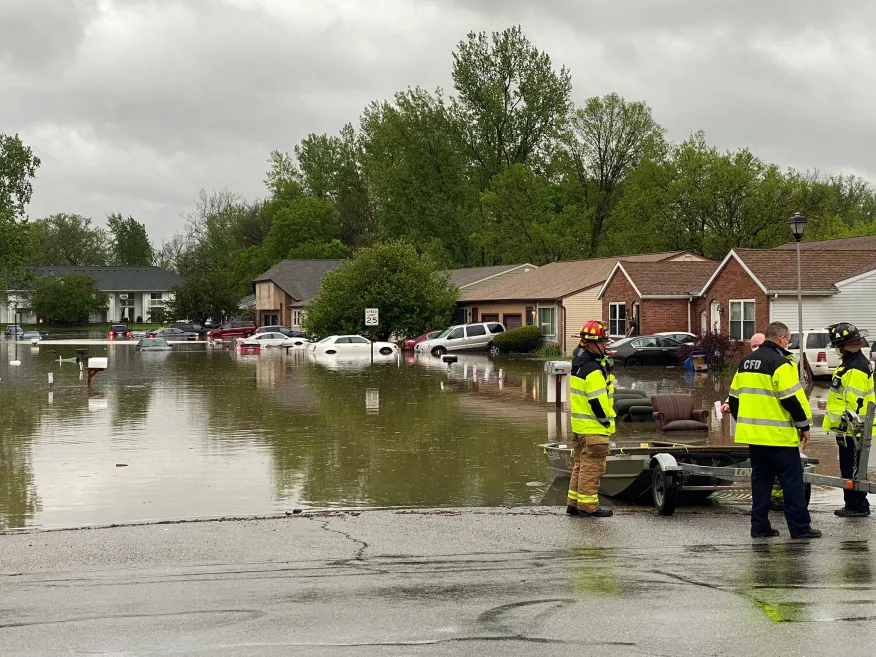
The decisions you make in the first 24 hours after flooding determine how much your property is damaged and how much your insurance pays. These are the eight mistakes we see most often after residential flood events in Cleveland and Northeast Ohio.
1. Entering a Flooded Basement Without Cutting Power First
If your Cleveland basement has standing water and any electrical outlets, panels, appliances, or wiring near or below the water line, do not go in. Water and electricity in an enclosed space can kill. Electrical systems in older Cleveland homes are often not up to current code, and water reaching a service panel or a submerged outlet creates a lethal environment. Go to your electrical panel — if it is in an unaffected area — and cut power to the basement circuits. If the main panel is in the basement, call FirstEnergy at 1-800-633-4766 to disconnect service at the meter before anyone enters.
2. Running Fans Before Extracting Standing Water
This is the most common mistake we see. Fans move air but do not remove water. Running fans over standing water or waterlogged carpet increases evaporation, raises indoor humidity, and disperses moisture into adjacent areas and the HVAC system. If the water source was a sewage backup — common during heavy Cleveland rain events on the NEORSD combined sewer system — fans aerosolize contaminated water and spread it throughout the living space. Extract standing water first, always. Then professional air movers and dehumidifiers go in after the contamination category is assessed.
3. Waiting More Than 24 Hours to Start Drying
Mold begins growing on wet organic material within 24 to 48 hours. Cleveland homes are older on average than most of the country. Waiting until morning, waiting to reach your insurance agent, waiting until the weekend is over — each of these delays pushes you closer to a mold remediation job on top of the restoration job. That combination is 40 to 60 percent more expensive than addressing it within the first 24 hours. Call a restoration company immediately, even at 2 a.m. Our line at (216) 803-6030 is answered 24 hours a day.
4. Throwing Out Damaged Materials Before Documentation
After a flood, the instinct is to clean up. But discarding materials before your insurance adjuster or restoration company has documented them can seriously harm your claim. Insurance adjusters pay claims based on documented evidence of damage. If you remove the carpet, the pad, the drywall, and the damaged contents before anyone photographs and inventories them, you have eliminated a large portion of the evidence your claim is based on. Take extensive photos and video of everything before moving anything. Your restoration company should also document the scene thoroughly before any demolition begins.
5. Assuming Standard Homeowners Insurance Covers All Flooding in Ohio
Standard Ohio HO-3 and HO-5 homeowners insurance covers sudden and accidental water damage from internal sources. It does not cover flooding from external water sources. Water that enters from the Cuyahoga River, from surface runoff during a storm, from groundwater seeping through your foundation, or from storm drains backing up during a NEORSD combined sewer overflow — all excluded from standard policies. Flood coverage requires a separate NFIP or private flood policy. Sewage backup coverage requires a water backup and sump overflow endorsement. Check your declarations page now, before an event, not after. FEMA’s resource on flood insurance is at ready.gov/floods.
6. Using Bleach to Treat Mold on Porous Materials
Bleach kills mold on non-porous surfaces like tile and glass. It does not kill mold inside porous materials like drywall, wood framing, or concrete block. The chlorine does not penetrate porous surfaces, so it bleaches the surface color while leaving the mold root structure intact inside the material. The mold appears to be gone. It is not. It regrows within days. For any mold growth on porous materials, the correct approach is physical removal of the affected material followed by treatment with a professional antimicrobial agent. See our full mold remediation page for the complete process.
7. Ignoring the Odor After Drying Out
A persistent musty smell after a basement flood or first-floor water event means the area was not fully dried. Materials feel dry to the touch at the surface long before they are dry inside. Drywall, concrete block walls, and wood subfloor retain moisture in their cores for days or weeks after the surface feels dry. That core moisture supports mold growth and produces the musty odor that persists after you thought the problem was resolved. This is a specific problem in Cleveland basements after spring flooding events. Homeowners dry out with fans and a home dehumidifier, the basement smells okay for a week, and then the smell returns. By then, mold has had 10 to 14 days of uninterrupted growth inside the wall cavities.
8. Not Calling Your Insurer Within 24 Hours
Most homeowners insurance policies include a prompt reporting requirement. Waiting days or weeks to report a claim can give the carrier grounds to dispute coverage on the basis that delayed reporting prevented them from investigating the cause. You do not need to know the full scope of the damage to open a claim. Notify your carrier that a loss occurred, provide the basic facts, and get a claim number. Your restoration company can begin mitigation and document everything for the claim file while you open that claim. For more on how insurance documentation works during flood cleanup, see our Cleveland flood cleanup page.
Questions About What to Do After Flooding in Cleveland
It depends on what flooded and why. A clean water burst pipe event with no electrical hazards and no sewage involvement is generally safe to stay in while restoration begins. A sewage backup event, a Category 3 flood from external water, or any event that has compromised structural integrity should be evaluated by a professional before you remain in the space. Cleveland sewage backup events during heavy rain involve raw sewage and are a Category 3 health hazard — do not occupy the affected space until it has been properly decontaminated.
For NFIP flood insurance claims, you must file a Proof of Loss within 60 days of the flood event. For standard homeowners insurance claims covering burst pipes or appliance failures, most carriers require prompt reporting within a few days of the event. Contact the Ohio Department of Insurance at 1-800-686-1526 if you have questions about your rights as a policyholder.
Flooding from the Cuyahoga River or Rocky River is surface water flooding and is not covered by standard homeowners insurance — you need an NFIP or private flood policy. Flooding from a storm drain or municipal sewer backing up through a floor drain is also typically excluded unless you have the water backup endorsement. Document the source of the flooding as carefully as possible. Contact the NEORSD at (216) 881-6600 to report sewer backup events in Cuyahoga County.
If the original flood event is a covered loss, mold that develops directly as a result of that event is generally also a covered loss. However, carriers will sometimes dispute mold claims if they believe the mold resulted from delayed reporting or failure to mitigate promptly. This is another reason why starting restoration within the first 24 hours and documenting every step matters. Having a professional restoration company on site from day one gives you the strongest possible position for a mold claim.
Charles Wilson — Owner, Cleveland OH Water Damage
Charles Wilson has spent years working in property damage restoration across Northeast Ohio, managing water damage, mold remediation, and structural drying projects in Cleveland and surrounding communities. Reach Charles at (216) 803-6030 or [email protected].
Flooded? Call Now. Every Hour Matters.
Call (216) 803-6030 for a 60-minute response or fill out the form.
Request Emergency Service
Fill out the form and we will call you back within 15 minutes.