
Mold Remediation Cleveland, Ohio | Find It, Remove It, Keep It Gone
Mold can establish colonies within 24 hours of water intrusion. We locate every growth site, contain it, remove it, and treat the underlying moisture problem so it does not come back.
(216) 803-6030 — Call NowQuick Answer
Mold remediation in Cleveland, Ohio takes 1 to 5 days depending on the affected area. Small isolated patches under 10 square feet take 1 to 2 days. Whole-room infestations or jobs involving HVAC contamination take 3 to 5 days. Mold begins growing within 24 to 48 hours of water contact, so calling fast limits the total scope.
Why Cleveland’s Climate Accelerates Mold Growth
Mold remediation in Cleveland is not the same as mold remediation in Arizona. The Greater Cleveland area gets an average of 38 inches of precipitation annually, with humid summers that keep indoor relative humidity elevated even in homes without an active water event. That baseline humidity — combined with the clay-soil moisture that naturally wicks through older basement walls — means homes here are operating closer to mold’s preferred humidity range than homes in drier climates.
The older housing stock in Cleveland compounds this. A home built in the 1920s in Slavic Village or West Park may have original wood framing that has absorbed decades of humidity cycling. When a pipe leaks or a basement floods, that old wood takes on water rapidly and gives it up slowly. Mold finds that environment ideal.
The EPA’s guidance on mold and health effects is clear: mold exposure causes respiratory symptoms, aggravates asthma, and produces mycotoxins in certain species that affect neurological function with long-term exposure. The EPA recommends that any visible mold covering more than 10 square feet be handled by a professional. See the full guidance at epa.gov/mold.
We locate mold that is not yet visible using moisture meters and thermal cameras. By the time black or green growth appears on a surface, the colony has already been established for days or weeks and has likely spread further into wall cavities than you can see.
See also: Water Damage Restoration Cleveland | Flood Cleanup Cleveland
Suspect Mold? Call Now.
We respond within 60 minutes and assess at no charge.
The Mold Development Timeline: What Happens After Water Gets In
Hours 0 to 1: Water Contacts Surface
Water begins penetrating porous materials immediately. Drywall paper is especially susceptible — it absorbs water within seconds and provides exactly the organic material mold spores need to germinate. The clock starts the moment water arrives.
Hours 24 to 48: Spore Germination
At sustained relative humidity above 60 percent and temperatures above 40 degrees — conditions present inside virtually every Cleveland home in spring and summer — mold spores begin germinating. You will not see anything yet, but the colony has begun. This is why the 24-hour window is critical.
Hours 72 to 96: Visible Growth and Spread
Mold becomes visible on surfaces by 72 to 96 hours. By this point, the colony has penetrated below the visible surface layer. What you see on the drywall face is only the outer edge of a growth that extends into the paper backing and potentially into the gypsum core and framing behind it.
After 1 Week: Cross-Contamination Risk
After one week, mold colonies are releasing spores actively. Air movement — from HVAC systems, fans, or even foot traffic — carries those spores to dry areas of the home. A single wet room can contaminate an entire HVAC system, seeding mold in every room that shares the same ductwork.
Our Mold Remediation Process
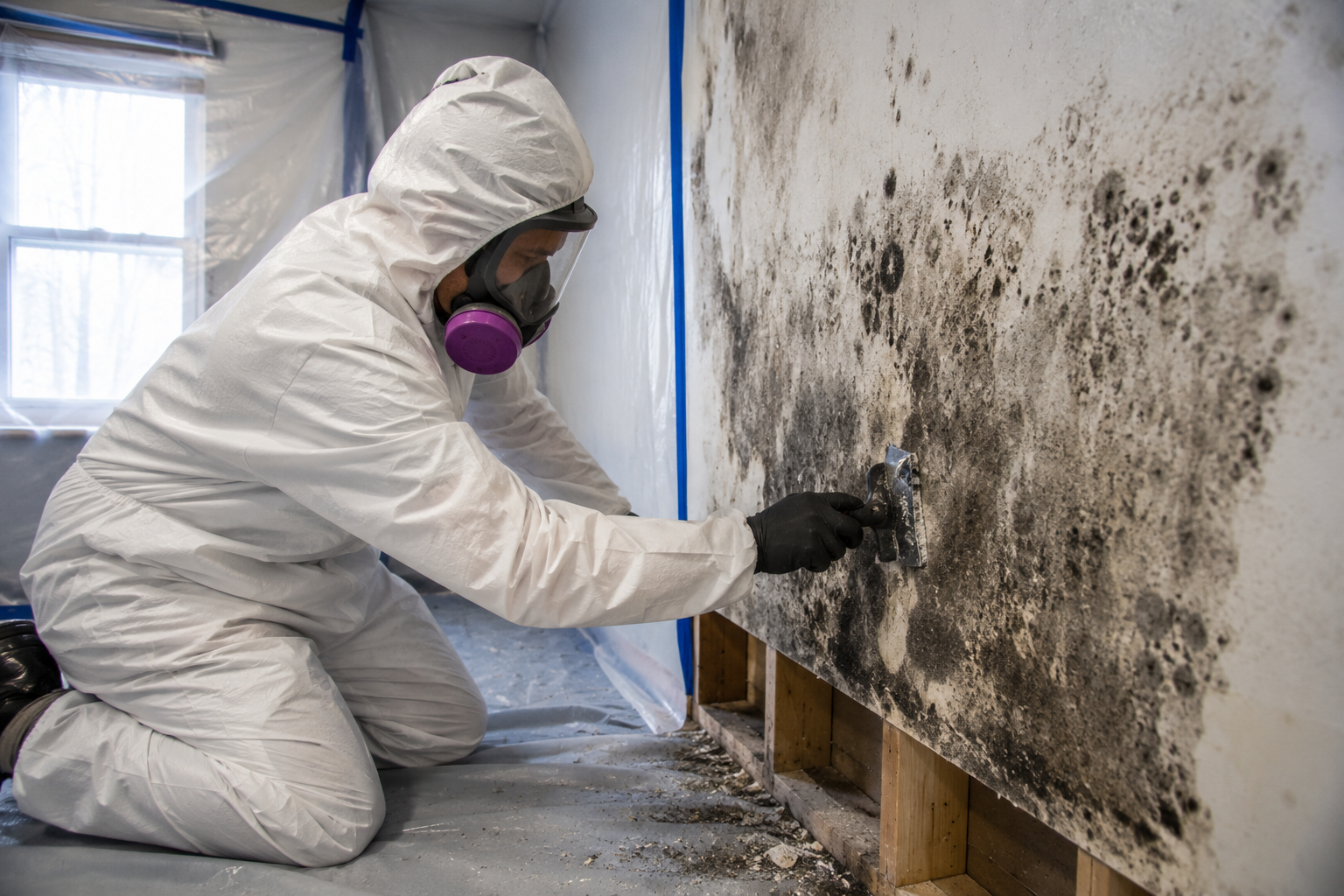
Containment first. Before we disturb any mold, we set up negative air pressure containment barriers with HEPA filtration. This prevents spores from spreading to unaffected areas during the removal process — a step many DIY attempts skip, which turns a localized problem into a whole-house one.
Full removal, not surface treatment. We remove all affected material. Mold cannot be killed in place on porous surfaces like drywall or wood — the organic material it has penetrated will continue to support regrowth regardless of what you spray on it. Surface treatments sold at hardware stores do not solve the problem inside a wall cavity. Removal does.
HEPA vacuuming and cleaning. All surfaces in the containment zone are HEPA-vacuumed and wiped with EPA-registered antimicrobial solutions to remove spore populations. Air scrubbers with HEPA filtration run throughout the process and for a period after completion to clean the air in affected areas.
Source moisture correction. Mold will return if the moisture source is not addressed. We identify the source — whether it is a plumbing leak, foundation seepage, condensation, or inadequate ventilation — and either repair it or coordinate with the appropriate specialist. Remediation without moisture correction is a temporary fix.
Post-remediation verification. After clearance, we document that mold levels are within normal background ranges before closing up the remediated area. This protects you and provides documentation for your insurance company.
Why DIY Mold Removal Makes Things Worse
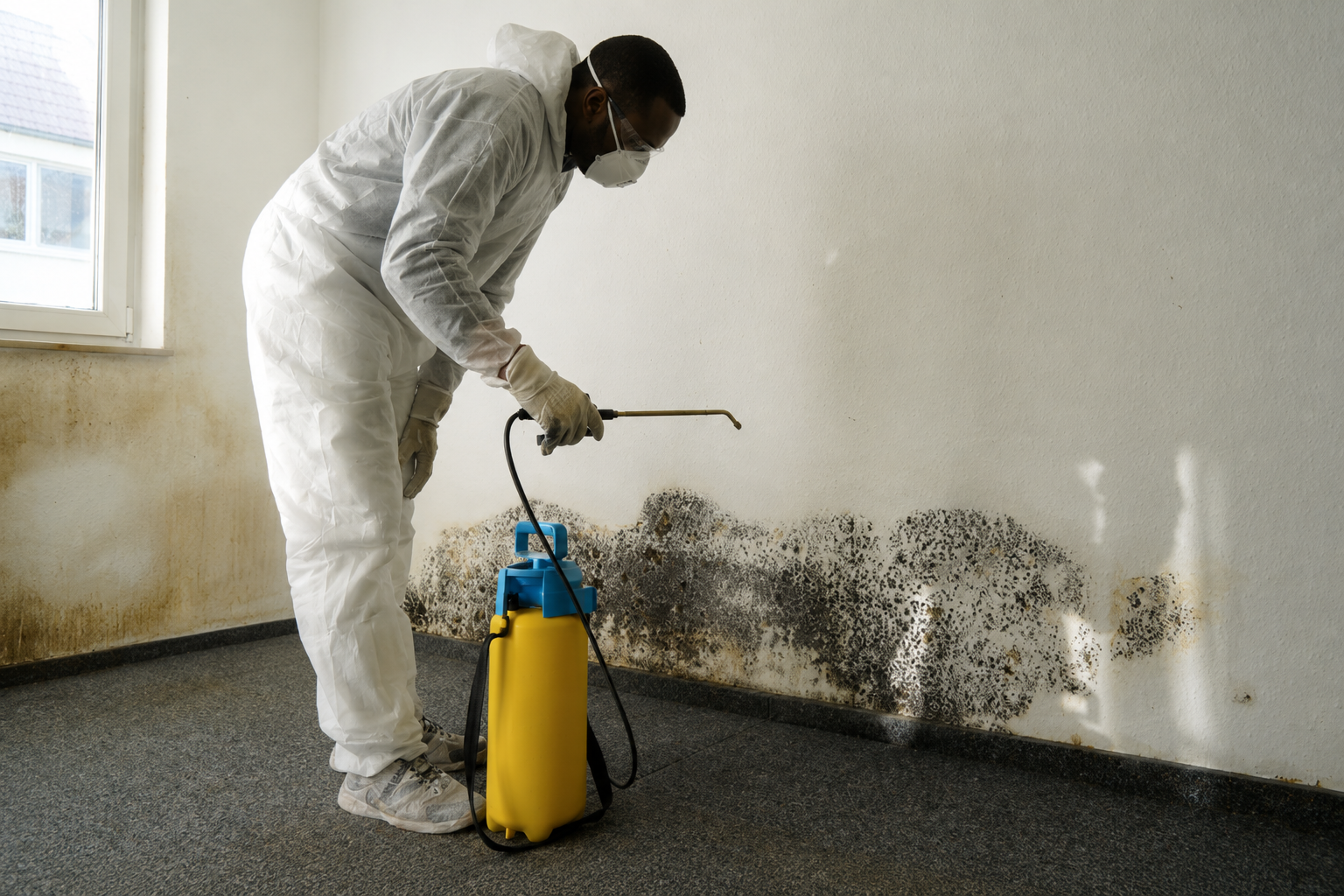
Bleach does not kill mold inside porous materials. It bleaches the surface — which makes it look clean — while leaving the hyphae (roots) intact inside the material. Within weeks, the colony regrows from the inside out. More importantly, disturbing mold without proper containment releases massive quantities of spores into your home’s air. A wet drywall section with moderate mold that is cut out without containment can contaminate the entire HVAC system in a matter of minutes.
Homeowners who attempt DIY mold removal also void certain insurance provisions by handling contaminated materials without documentation. If you later discover the mold returned and spread, demonstrating prior professional standards becomes difficult without a documented remediation record.
For anything beyond a very small isolated surface spot — and even then — call a professional first. A phone assessment costs nothing. See our blog post: Signs You Have Hidden Water Damage in Your Cleveland Home.
Mold Remediation Service Area — Cleveland and 50 Miles
We serve all communities within 50 miles of Cleveland for mold inspection, testing, and remediation.
Frequently Asked Questions About Mold Remediation
Small isolated areas under 10 square feet typically take 1 to 2 days. Larger infestations or whole-room remediation take 3 to 5 days. Jobs involving HVAC decontamination or multiple rooms can take up to a week. We give you a timeline estimate on day one after the inspection.
Ohio homeowners policies typically cover mold remediation when the mold resulted from a covered water event — a burst pipe or roof storm damage, for example. They generally exclude mold caused by long-term neglect, maintenance failures, or flood events without separate flood insurance. The source of the moisture determines the coverage. We document everything to support your claim.
For small localized jobs in a single room or basement, most families can remain in the home while keeping out of the containment zone. For larger jobs, especially those involving HVAC contamination or widespread growth in living areas, temporary relocation during the active remediation phase is usually recommended, particularly for household members with asthma or respiratory conditions.
Active mold growth typically produces a musty, earthy odor that intensifies in enclosed spaces like closets, basements, and rooms with poor ventilation. Visible signs include dark spots or fuzzy growth on drywall, wood, grout, or ceiling tiles. However, the most significant mold colonies are often invisible — inside wall cavities, under flooring, or in HVAC systems. If you smell it but cannot see it, call us for an inspection.
Reach Out About Mold
Fill out the form and we will call you back within 15 minutes.